China Top Battery Management System Manufacturers?

Time:2026-10-10 Author:Liam
0%

China has become a major manufacturing base for electric vehicles, energy storage systems, and industrial batteries. Its Battery Management System suppliers range from highly specialized engineering firms to large electronics manufacturers. This market is broad, capable, and sometimes difficult to compare.

A practical review should examine more than product brochures. It should assess balancing accuracy, state-of-charge estimation, thermal monitoring, communication protocols, cybersecurity practices, and documented safety testing. Field experience also matters. A BMS that performs well in a laboratory may behave differently inside a vibrating vehicle, a humid warehouse, or a container exposed to summer heat. Integration support can decide whether a project succeeds.

Dr. Davide Andrea, a recognized battery-management expert and author, has described the BMS as “the brain of the battery pack.” That comparison remains useful. The system must interpret cell voltage, temperature, current, and aging data before taking protective action. Yet no supplier is perfect. Specifications may be incomplete, software updates may change performance, and published certifications require careful verification. This article examines China’s top Battery Management System manufacturers through engineering capability, product reliability, manufacturing experience, customization, after-sales support, and transparent documentation. It also considers whether each company fits electric vehicles, residential storage, commercial systems, or demanding industrial applications. Rankings can never replace technical due diligence. Real test data is still essential.
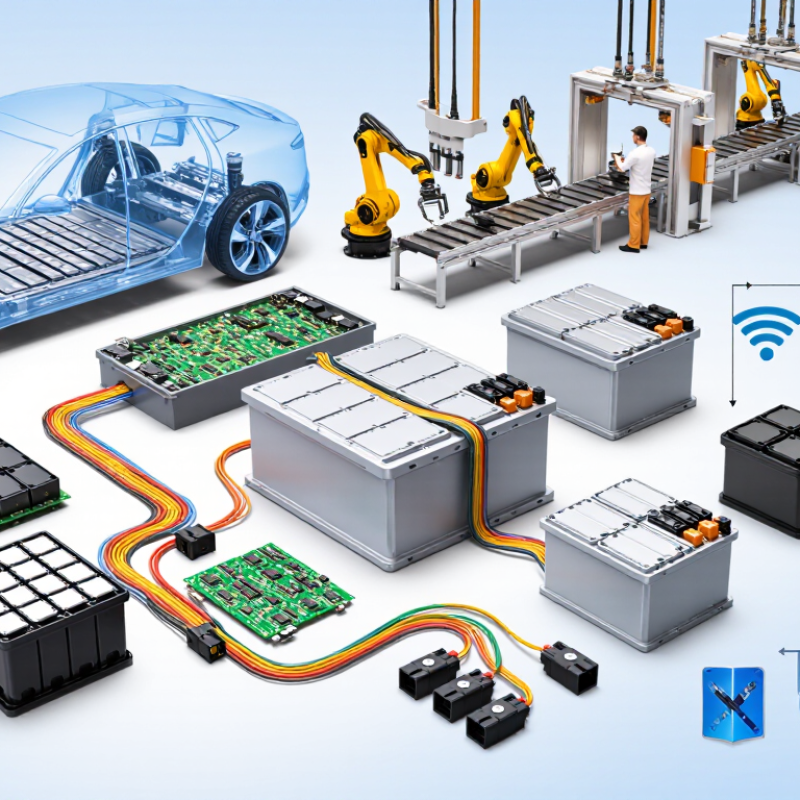
China Top Battery Management System Manufacturers?

Battery Management Systems Explained: Cells, SOC, SOH, and Safety Functions

A battery management system, or BMS, monitors every cell inside a battery pack. It measures voltage, temperature, current, and charging conditions. A healthy pack depends on balanced cells. Even small voltage differences can grow during repeated charging. Cell balancing reduces this drift and helps prevent weak cells from limiting the entire pack.

State of charge, or SOC, estimates available energy. It is not simply a fuel gauge. The BMS combines current measurements, voltage readings, temperature data, and charging history. State of health, or SOH, describes ageing and remaining capacity. Heat, deep discharge, and frequent fast charging can reduce SOH. Estimates are useful, but never perfect. Sensors can drift. Software can misjudge a cold cell.

Safety functions deserve close inspection when comparing Chinese BMS manufacturers. A reliable design should detect overvoltage, undervoltage, overcurrent, overheating, insulation faults, and abnormal charging. It should also record fault events for service teams. In testing, protection must work under realistic conditions, including blocked cooling and uneven cell temperatures. A warning alone is not enough. The system needs a controlled response, such as reducing current or opening a contactor. Engineers should review test records, firmware controls, communication protocols, and traceability. Some specifications look impressive on paper. Field performance may tell a different story.

China’s Leading BMS Manufacturers for 400–800 V EV Battery Platforms

China’s leading BMS manufacturers are increasingly designing for 400–800 V EV battery platforms, not only low-voltage packs.

At these voltages, measurement accuracy, isolation, and communication timing become practical safety requirements. A capable supplier should support modular cell-monitoring units, high-voltage sensing, contactor control, and insulation monitoring interfaces. Engineers should request evidence from pilot vehicles, not polished brochures. Real hardware matters.

For an 800 V pack, small measurement errors can affect balancing decisions and usable range. Reliable manufacturers usually combine automotive-grade components with traceable production controls.

Look for thermal cycling, vibration, humidity, EMC, and high-voltage isolation tests. Factory inspection should include calibration records, firmware version control, and end-of-line functional testing. CAN FD support is useful, but software diagnostics and fail-safe behavior matter more during a roadside fault. Review response time when a sensor disconnects or a contactor welds. These details reveal engineering maturity.

Supplier selection should include prototype support, validation data, and clear responsibility for field updates. A technically strong Chinese manufacturer can shorten development cycles through local engineering and flexible customization. Still, customization is not automatically a strength.

Poorly controlled changes can create hidden differences between samples and production packs. Ask for change notifications, cybersecurity processes, and long-term spare-part planning. Small gaps remain possible, even in experienced teams.

How BMS Accuracy Reaches ±1% SOC and Supports 1,000+ Cell Cycles

China’s leading battery management system manufacturers are competing on measurement accuracy, not only hardware price. The IEA’s Global EV Outlook 2024 reports that China produced about 60% of the world’s battery cells in 2023. That scale increases pressure for dependable BMS design. Accurate systems combine calibrated current sensors, cell-voltage sampling, temperature tracking, and adaptive SOC algorithms.

A claimed ±1% SOC accuracy requires controlled validation across temperature, load, aging, and charging conditions. IEC 62660-1 testing guidance emphasizes repeatable cell performance tests, but real vehicles rarely operate under laboratory conditions. Engineers therefore compare coulomb counting with open-circuit voltage and periodic recalibration. Small sensor offsets can become large range errors.

Cycle life needs caution. A BMS may help support more than 1,000 cycles by limiting overcharge, deep discharge, heat, and cell imbalance. It cannot guarantee that result alone. The IEA notes that battery durability depends on chemistry, charging behavior, climate, and operating conditions. This is where many product claims become too simple. A credible supplier should publish test temperature, depth of discharge, sampling rate, accuracy limits, and aging results. Field data matters more than a single showroom number.

Comparing CAN FD, ISO 26262 ASIL, and Thermal Protection Capabilities

When comparing China’s leading battery management system manufacturers, CAN FD, ISO 26262 ASIL, and thermal protection reveal more than headline specifications.

CAN FD supports larger payloads and faster communication than classical CAN. That matters when a pack reports cell voltages, temperatures, balancing status, and diagnostic codes. In practice, I look beyond claimed bitrate. I ask for bus-load tests, error-frame behavior, wake-up timing, and trace files from cold starts. Not just speed.

ASIL is a development discipline, not a sticker added to a controller.

A serious supplier should explain its safety goals, hazard analysis, software controls, hardware metrics, and verification evidence. ASIL-B or ASIL-C claims need context, because the required level depends on the vehicle function and safety concept. Supplier independence also matters during assessment. I prefer clear interfaces and auditable change records over impressive certificates. Public evidence is often thinner than marketing language. That gap matters.

Thermal protection deserves physical detail.

Look for sensor placement near cell groups, redundant temperature paths, over-temperature limits, cooling-failure detection, and controlled contactor opening. Test reports should show heat rise, sensor delay, hysteresis, and recovery behavior under repeated charging. Some systems react quickly but sacrifice usable capacity. Others protect cells conservatively and trigger nuisance shutdowns. I have seen both trade-offs.

A stronger evaluation combines CAN FD logs, ISO 26262 work products, and chamber-test data. I would also request samples across production lots, because one excellent prototype proves little.

Selecting Chinese BMS Suppliers by Scale, Certifications, and Application Fit

China Top Battery Management System Manufacturers?

Selecting Chinese BMS suppliers requires more than comparing prices. Scale matters. The International Energy Agency reported nearly 14 million electric cars sold globally in 2023, with electric vehicles exceeding 18% of new car sales. This growth increases pressure on suppliers to maintain stable production, traceable components, and responsive engineering support. Ask for monthly output, factory capacity, incoming inspection records, and failure-rate data. A large facility is useful, but it does not guarantee a suitable BMS.

Certifications matter. For industrial and vehicle projects, review evidence linked to IEC 62619, UL 1973, UN 38.3, and ISO 26262 where relevant. Certificates should match the exact product family, not only the company name. Battery pack prices reached about $115 per kWh in 2024, according to BloombergNEF, making accurate protection and balancing increasingly important. Request test conditions, thermal data, communication protocols, and firmware change records. A neat certificate list can still mislead.

Application fit deserves practical testing. A low-voltage storage system may need different balancing speed, sampling accuracy, and communication interfaces than an electric bus pack. Check performance across cold starts, high humidity, vibration, and repeated charge cycles. Conduct a sample validation before signing a long contract. I would not rely on laboratory claims alone. Field data is better. Poor documentation remains a common weakness, even among technically capable suppliers. The best evaluation combines factory audits, independent testing, software review, and clear after-sales responsibilities.

FAQS

What should an 800 V battery management system measure accurately?

It should monitor cell voltage, pack current, temperature, and insulation status. Small errors can change balancing decisions and driving range. Accuracy needs proof under heat, cold, charging, and aging.

Does a claimed ±1% state-of-charge accuracy guarantee real driving range?

No. That number may come from controlled laboratory tests. Real vehicles face sensor drift, temperature changes, traffic, and uneven battery aging. Ask for test conditions and recalibration methods.

Can a battery management system guarantee more than 1,000 cell cycles?

It cannot guarantee that result alone. The system may reduce overcharging, deep discharge, heat, and cell imbalance. Chemistry, charging habits, climate, and usage still matter.

Which tests should a supplier provide before sample approval?

Request thermal cycling, vibration, humidity, electromagnetic compatibility, and high-voltage isolation results. Also review calibration records and end-of-line functional tests. Real vehicle data is more convincing.

Why are contactor control and fault response important?

The system should detect sensor disconnection, welded contactors, and communication failures quickly. It needs defined fail-safe behavior during roadside faults. Timing details reveal practical engineering quality.

Is a large factory automatically a better supplier?

Not always. Production scale helps with capacity and component traceability. It does not prove application fit, software quality, or reliable after-sales support. Check failure data and factory records.

What documents should buyers request before signing a long contract?

Request product-specific certificates, test conditions, firmware records, communication details, and change notifications. Confirm that certificates match the exact product family. A tidy document set can still hide gaps.

How can buyers evaluate customized battery management systems?

Test prototypes across cold starts, high humidity, vibration, and repeated charging. Compare samples with production units. Customization sounds useful, but uncontrolled changes can create hidden differences. I would verify everything.

Conclusion

A Battery Management System is the control center of a modern EV battery pack, monitoring individual cells, estimating state of charge (SOC) and state of health (SOH), balancing energy, and protecting against overvoltage, overcurrent, overheating, and abnormal operating conditions. For 400–800 V platforms, advanced BMS solutions must manage high-voltage architectures, support reliable communication, and maintain accurate data across demanding driving and charging cycles. With appropriate sensing, algorithms, calibration, and thermal strategies, some systems can target SOC accuracy within ±1% while helping battery packs achieve more than 1,000 usable cycles.

When evaluating Chinese BMS manufacturers, buyers should compare experience with high-voltage EV platforms, production scale, testing capabilities, and relevant quality and functional-safety certifications. Important technical considerations include CAN FD communication, ISO 26262 ASIL support, cell-balancing performance, thermal protection, fault diagnosis, software update capability, and system integration. The best supplier is not necessarily the largest, but the one whose certification level, engineering resources, customization capacity, and application experience closely match the vehicle or energy-storage project’s requirements.

Liam

Liam

Liam is a dedicated marketing professional with a profound expertise in the industry, where he excels at highlighting the unique advantages of our core products. With a keen understanding of market trends and consumer needs, Liam frequently updates our company’s professional blog, providing......